Tag: COVID-19
What happens to charitable giving when the economy falters?
Patrick Rooney, IUPUI and Jon Bergdoll, IUPUI
As the new coronavirus pandemic sends the economy into a tailspin, Patrick Rooney, an economist at the Indiana...

6 things you can do to cope with boredom at a...
Erin C. Westgate, University of Florida
More and more of us are staying home in an attempt to slow down the spreading coronavirus. But being...
Another housing crisis is coming – and bailouts and eviction freezes...
Roshanak Mehdipanah, University of Michigan and Gregory Sallabank, University of Michigan
Millions of Americans are suddenly out of work as the financial and economic crisis...
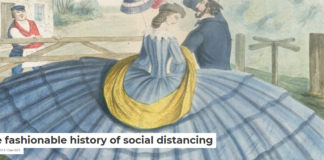
The fashionable history of social distancing
Einav Rabinovitch-Fox, Case Western Reserve University
As the world grapples with the coronavirus outbreak, “social distancing” has become a buzzword of these strange times.
Instead of...

Labs are experimenting with new – but unproven – methods to...
Jean Peccoud, Colorado State University
The coronavirus has ground social, economic and educational exchanges to a halt around the world. For now, public health officials...
What ‘Walden’ can tell us about social distancing and focusing on...
Robert M. Thorson, University of Connecticut
Seeking to bend the coronavirus curve, governors and mayors have told millions of Americans to stay home. If you’re...

Religious communities are offering baptism by Zoom – such innovation has...
Samuel L. Boyd, University of Colorado Boulder
The coronavirus pandemic is forcing entire countries to rethink deeply-held social norms. Faith leaders are coming up with...
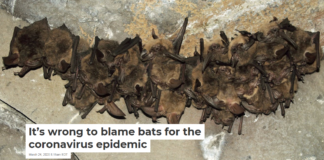
It’s wrong to blame bats for the coronavirus epidemic
Peter Alagona, University of California, Santa Barbara
Genomic research showing that the COVID-19 coronavirus likely originated in bats has produced heavy media coverage and widespread...
EXPLORING NATURE

Trump’s EPA decides climate change doesn’t endanger public health – the...
Jonathan Levy, Boston University; Howard Frumkin, University of Washington; Jonathan Patz, University of Wisconsin-Madison, and Vijay Limaye, University of Wisconsin-Madison