Tag: Oceans
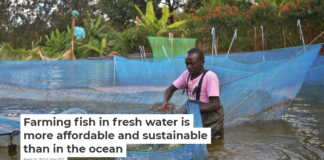
Farming fish in fresh water is more affordable and sustainable than...
Ben Belton, Michigan State University; Dave Little, University of Stirling, and Wenbo Zhang, Shanghai Ocean University
A tidal wave...
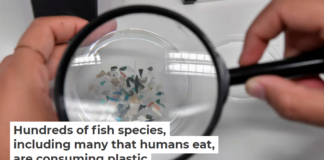
Hundreds of fish species, including many that humans eat, are consuming...
Alexandra McInturf, University of California, Davis and Matthew Savoca, Stanford University
Trillions of barely visible pieces of plastic are...
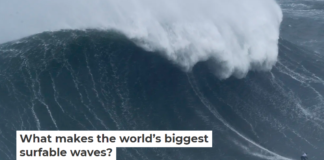
What makes the world’s biggest surfable waves?
Sally Warner, Brandeis University
On Feb. 11, 2020, Brazilian Maya Gabeira surfed a wave off the coast of Nazaré, Portugal, that was 73.5 feet tall....
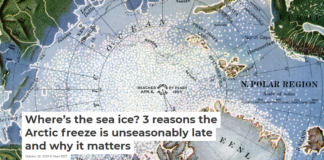
Where’s the sea ice? 3 reasons the Arctic freeze is unseasonably...
Mark Serreze, University of Colorado Boulder
With the setting of the sun and the onset of polar darkness, the Arctic Ocean would normally be crusted...
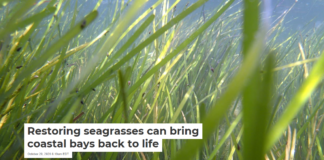
Restoring seagrasses can bring coastal bays back to life
Robert J. Orth, Virginia Institute of Marine Science; Jonathan Lefcheck, Smithsonian Institution, and Karen McGlathery, University of Virginia
A century ago Virginia’s coastal lagoons were...
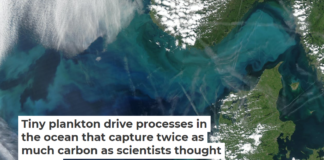
Tiny plankton drive processes in the ocean that capture twice as...
Ken Buesseler, Woods Hole Oceanographic Institution
The Research Brief is a short take about interesting academic work.
The big idea
The ocean plays a major role in...
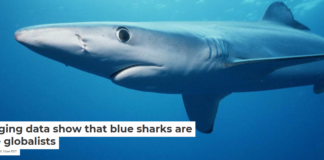
Tagging data show that blue sharks are true globalists
Jasmin Graham, Florida State University
CC BY-NDBlue sharks are among the widest-ranging shark species in the oceans. We know this partly because from 1962 to...
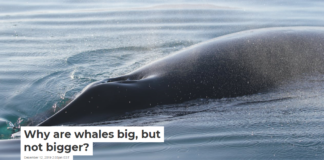
Why are whales big, but not bigger?
Matthew Savoca, Stanford University; Jeremy Goldbogen, Stanford University, and Nicholas Pyenson, Smithsonian Institution
Both toothed and baleen (filter-feeding) whales are among the largest animals ever...
EXPLORING NATURE

Trump’s EPA decides climate change doesn’t endanger public health – the...
Jonathan Levy, Boston University; Howard Frumkin, University of Washington; Jonathan Patz, University of Wisconsin-Madison, and Vijay Limaye, University of Wisconsin-Madison