Antonio Machado Allison, Wesleyan University
Venezuela’s Orinoco River Basin is a wild land of lush forests, grasslands and a vast delta of jungle wetlands teeming with wildlife. River dolphins and endangered Orinoco crocodiles ply its waterways, and over 1,000 freshwater fish and bird species can be found there.
During the rainy season, the Orinoco is the world’s third-largest river by discharge. But this region – which Venezuelans rely on for water and hydropower – is facing a growing environmental disaster.
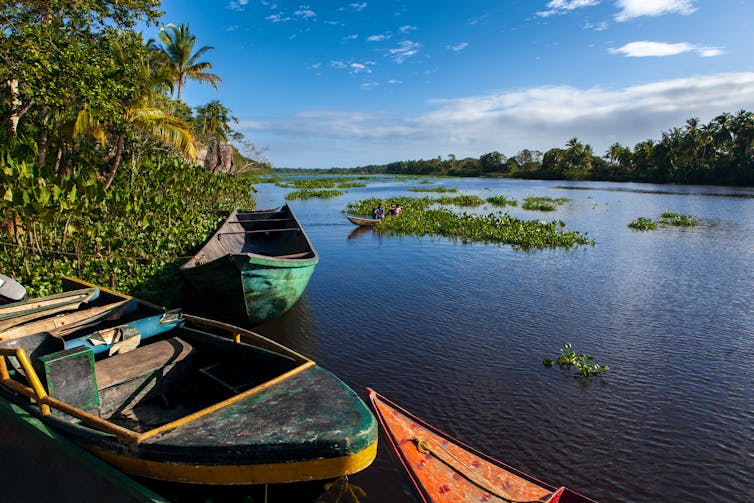
Over millions of years, organic and geological processes left the fragile region rich in both biodiversity and mineral resources, including the world’s largest proven oil reserve and valuable metals such as gold, iron and coltan, a source of niobium and tantalum for the tech industry.
Illegal mining that accelerated under former President Nicolás Maduro over the past decade is tearing up one of the most biodiverse regions of the world, with little sign of stopping. Now, the Trump administration is pushing to ramp up critical minerals mining and oil drilling in Venezuela, where the industry has a long history of oil spills and neglected equipment, with little discussion of protecting the environment.
Mining is expanding in the forests
Mineral exploitation in Venezuela is as old as the country. Historically, a few big mines were run by international companies and mining was controlled. But in the early 2010s, the government of former President Hugo Chávez nationalized the gold industry and hinted that the government would open small-scale mining to the public.
In 2016, Maduro, facing falling oil production and scrambling for revenue, followed through, declaring a large part of the Orinoco River Basin to be the Orinoco Mining Arc, where mining would be prioritized. The region encompasses about 12% of Venezuela, including national monuments, national parks and Indigenous communities.
Today, tens of thousands of people mine in the jungle, living in often squalid, violent and contaminated conditions.
Criminal gangs known as “colectivos” or “sindicatos” control many of the mining operations with little government intervention. Guerrilla groups from Colombia have also spilled over the border into the region.
The mining operations cut down forests and remove soil. Toxic materials, including mercury used to extract gold from ore, pour into rivers, contaminating the water and harming the workers, wildlife and surrounding communities that rely on local fish and wildfire.
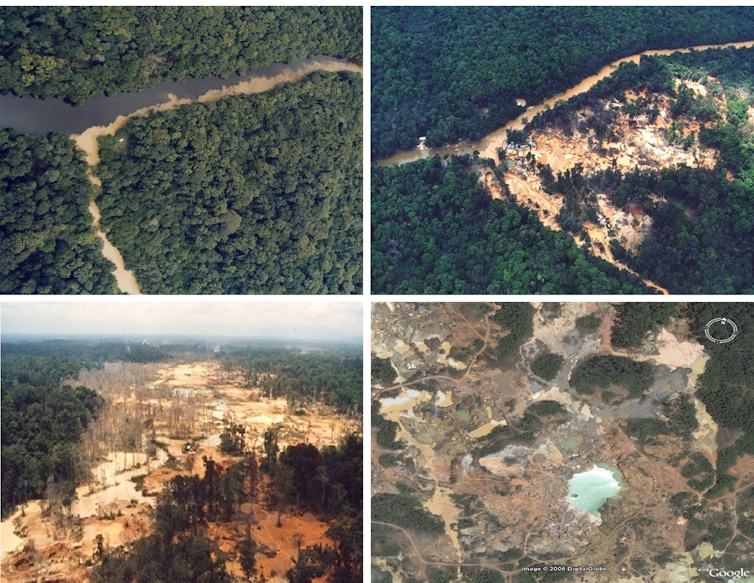
The mines also promote the spread of tropical infectious diseases and disrupt indigenous and rural communities. Evidence of environmental disasters and human rights violations, including human trafficking, child labor and sexual assault, have been documented by several public and private organizations.
Oil and the law
The same Orinoco River Basin holds part of the world’s largest proven crude oil reserves. After the Trump administration seized Maduro on Jan. 3, 2026, and arrested him on drug trafficking charges, it said the U.S would control that oil. But what exactly that will mean and how the oil industry will respond remains to be seen.
By law, oil and other natural and mineral resources belong to the state in Venezuela. Oil exploration, extraction and commercialization are carried out through a system called “concessions” – contracts between the government and national or foreign private companies. In exchange for access to resources, the country receives an income, or tribute, from the profits generated.
However, the Constitution of the Bolivarian Republic of Venezuela, approved in 1999, also clearly states that “the State shall protect the environment, biological and genetic diversity, ecological processes, national parks and natural monuments, and other areas of particular ecological importance.”
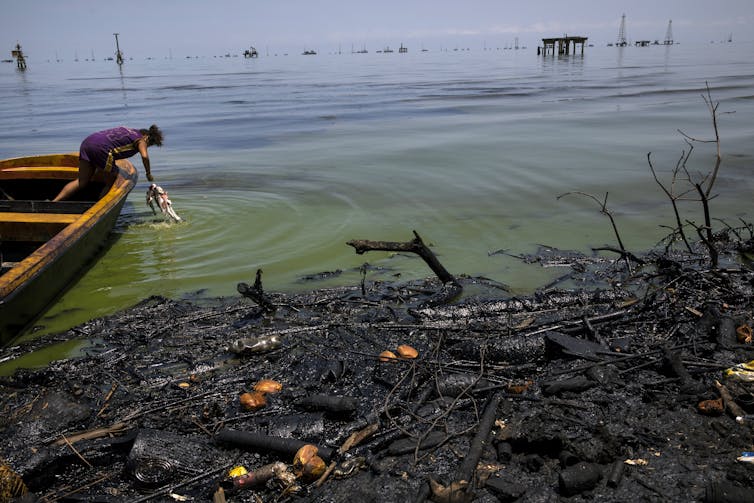
Analysts estimate that rebuilding the industry, which has been plagued by poorly maintained infrastructure and leaks and spills, would take years to decades. It would likely mean more roads in a region already losing pristine forest and put more of the environment and water at risk. The region’s heavy oil production has also led to water pollution.
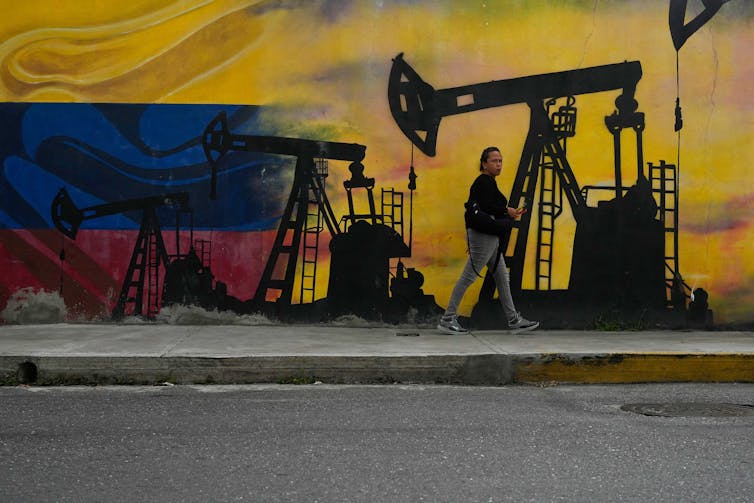
In the 1920s, oil drilling helped lift the economy of Venezuela, previously a very poor, largely agrarian country. The country had been plagued with malaria and other tropical diseases, the population was poorly educated, and there were continuous fights among military strongmen, known as “caudillos.” Oil brought in foreign investment, making Venezuela the second-largest oil producer in the world by 1928 and its largest exporter.
In 1976, with the country’s economy heavily dependent on oil, Venezuela nationalized the oil industry. Foreign industries could partner with the state oil company, but only if the government held the controlling share of the joint ventures. Boom times led to inflation, and oil price drops became disastrous for the economy.
The U.S. began imposing sanctions on Venezuela in 2015 over drug trafficking and human rights abuses, and those sanctions increased during the Trump administrations. Between the sanctions and mismanagement, Venezuela’s oil production collapsed, and with it, the national economy.
Venezuelans’ future
With the removal of Maduro, former Vice President Delcy Rodríguez is in charge of the government.
In January, she signed legislation that eases state control over oil drilling but keeps ownership of the hydrocarbon reserves with the nation. She also met with U.S. officials in March and pledged to accelerate mining reforms that would give foreign companies access to Venezuelan minerals.
The shift in leadership does not guarantee other changes from Maduro’s regime, however. In her past roles, including as minister of foreign affairs and economy and as vice president, Rodriguez was involved in overseeing the Orinoco Mining Arc at a time when criminal activity and illegal mining were rapidly expanding there, environmental groups point out.
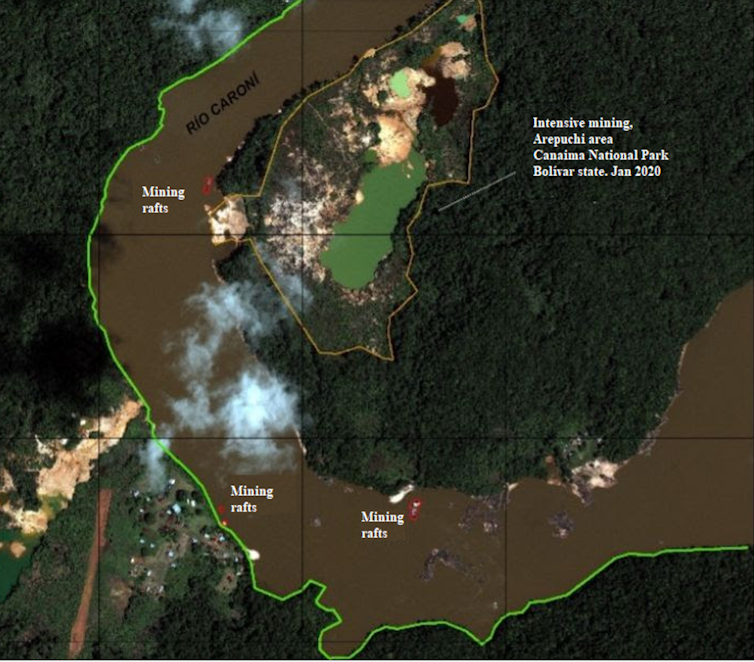
Studies of satellite data tracking deforestation suggest that Venezuela lost roughly 185 square miles (480 square kilometers) to gold mining alone from 2018 to 2025. Mining has moved into national parks, including Canaima, home to Angel Falls.
Venezuela, meanwhile, is still deep in an economic crisis that led to millions of people leaving the country.
The majority of the population lives in poverty, and inflation continued to skyrocket in early 2026. As the U.S. eases sanctions, that is likely to help, but the country has many problems to overcome.
Antonio Machado Allison, Professor of Environment and Latin American Studies, Wesleyan University
This article is republished from The Conversation under a Creative Commons license. Read the original article.